Launching an elevated home fragrance brand with clean ingredients from ground up.
Below60 is a Los Angeles–based home fragrance brand dedicated to elevating everyday experiences in our most sacred spaces through all-natural essential oils and ingredients. Founded by serial entrepreneur Brian Lee—co-founder of The Honest Company—and represented by Hilary Duff, Below60 officially launched in Winter 2023. The brand and product line were the result of a two-year collaboration, thoughtfully built from the ground up to deliver purity, intention, and sensory impact.
Design a new elevated fragrance brand for homes from ground up.
-
Plug-in fragrance device
-
Cohesive brand visual identity across customer touch points
-
Package design
-
Online store customer flow and UX
-
Below60 successfully launched in 2023 winter and is profitable.
Brian, Jeff, Mark, Pete, Hilary, Thomas, Karina, Chris and many more.
Winter 2023

Through a series of design programs and sprints, we built a cohesive design system for Below60, with Hilary Duff serving as its face and inspiration.

Program 1
Plug-in fragrance device Industrial Design
A physical design language that blends in with the rest of the house and is genre-appropriate. We needed to ensure it is easy to control scent-intensity and effortlessly replace refill cartridges.

Program 2
Visual brand language
Below 60 degrees latitude is known to have the cleanest air on Earth. Brand Below60 is on a mission to bring the cleanest air to your special homes with natural essential oil.

Program 3
Naming convention and fragrance package design
Fragrance names that paint a picture for a online first brand. Resist bold statements on "All Natural Ingredients".

Program 4
Device package design and unboxing experience
Cohesively presenting the products and fragrance cartridges with the granularity of information consumers are looking for. We introduced a starter kit for an online-first fragrance brand featuring 3 of Below60's most beloved fragrances.


The first engagement focused better understanding the customer basis and designing the device itself.
Program 1
Plug-in fragrance device Industrial Design
A physical design language that blends in with the rest of the house and is genre-appropriate. We needed to ensure it is easy to control scent-intensity and effortlessly replace refill cartridges.


To understand our users and market, we conducted two rounds of interviews with 15 fragrance enthusiasts. Through 60-minute sessions, we explored how they manage scents at home, their reactions to early concepts, and which ideas they felt were worth developing further


Insight 1
People are mindful of how the device looks and would blend in with the rest of their home—It is more about how it would look with the rest of their home rather than one thing looking good. People perceive plug-ins as something cheesy, cheap and ugly; they are not motivated nor product to showcase the product. People are seeking for products that are able to blend in or be used as a display piece.
Jaslin: "Something more genre appropriate..." Mira: “Airwicks don't fit in everyone's home; you want something that's going to be multi-dimensional for whoever, whatever style your homes have.”
Insight 2
People have built a perception that plug-ins are used to cover up odors, not to make the surroundings more pleasant—within the realm of home fragrance devices, people have built negative connotation with plug-in devices. People responded scented candles or essential oils make their homes more pleasant and elevate the quality of their lives whereas plug-ins are used to cover up odors.
Jaslin: "I don’t really love the scent of it. I have it there because I was having issues with the pipes." Joni: “Mostly what I've enjoyed it for us, like in the room where I feed my dog and I don't like Scent with my dog food. So I'm keeping it in there to cover it up.”
Insight 3
Plug-in fragrances and scents are inappropriate, artificial, commercial and fake—plug-in scents have negative connotation as cleaning products and oftentimes feel fake and over the head. Plug-ins are tools; they are used to get the job done.
Jillian: “It’s more of a commercial scent to me, and in my living spaces, I prefer having a candle. Making it feel more homey rather than artificial.” Chacha: “I originally got it for my mother’s retirement home and it seemed to work until everyone caught onto it and the scents are so bad.”
Insight 4
Scents and fragrances are a form of self-expression and it is a personal statement; like music—Smelling a scent is an emotional experience and is abstract form of expression and statement. Once people discover a scent or a type that they like, they will stick to it.
Jillian: “Scents are kind of in a way like music because they are more of an emotional experience.” Brendan: “the home textures are really about mindset. I would say, at home and almost like a force field. So if you know how you feel when you go home and take off his shoes and start twinkling the toes, and your shag carpet, that's still in the feeling relaxed, you know, the scent are to actually draw out those types of emotions.“
Insight 5
Candles and diffusers are the safest choices to gift but devices or machines make it hard to gift—there is a tension between what is giftable and what is not. We noticed a strong culture built around giving and receiving candles as hostess, housewarming or secret santa gifts. Candles are broad, give out good vibe and energy, and are not so personal or specific.
Jillian: “...a candle, even your cheapest candle is never necessarily an eyesore, but some sort of electronic devices are” Jaslin: "I would lean towards an aesthetic a little more, like genre appropriate."
Consideration 1
The aesthetics should not be genre-specific and should blend in with the surrounding
It’s not about how a product looks, but about how it would look with rest of the house. Form and aesthetics should consider for a wide range of styles. Smelling scent is an emotional and nostalgic experience should be timeless.
Consideration 2
Hardware should be simple and not feel like another layer of clutter
People are conscious of the space and real estate an object or a belonging takes up. There is a desire to declutter; hardware should be simple and be mindful of where it lives and the space it takes up.
Consideration 3
The device should allow users to decide what is right for them and provide a sense of control
Scents are personal and people have strong preferences. The device should accommodate and allow users to decide what is right for them.
Consideration 4
Quality. The build and interaction of the device should provide elevated experience that is differentiated from the market
people have built a negative connotation with plug-in air fragrance device and the interaction should prove the opposite.

Industrial Design Treatment
Treatment that is slim and sleek as possible and disappears to the background
Decluttering what is visible by moving the interaction points to the rear.
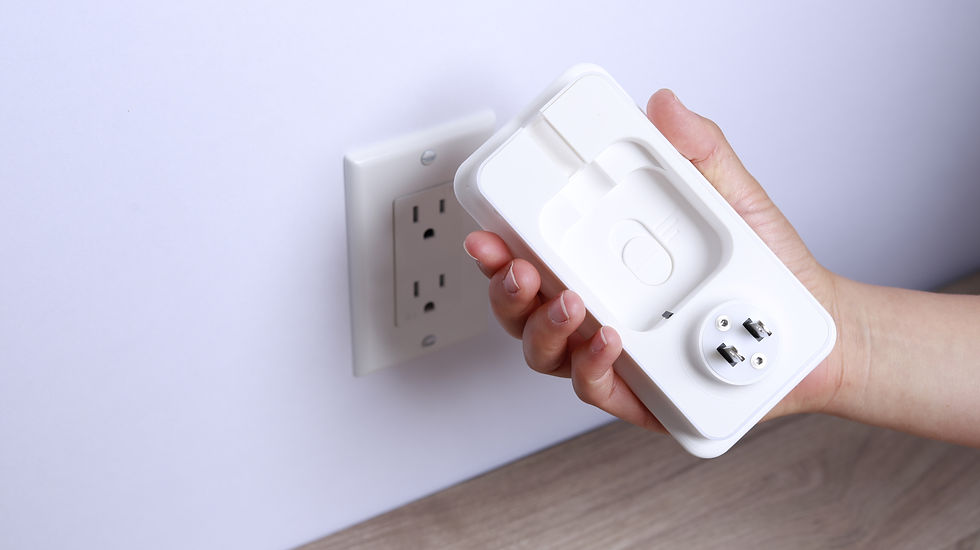
Intensity Control
Initially, people want to control what is right for them but once they do, the control is almost never touched again
Set the right intensity and forget.

Subtle Communication
Seamless and magical interactions like magnetic snaps will a differentiator
Existing products require force for assembly and disassembly. This degrades the experience.

Emphasis on Scent
Designing for the experience people will have while removing the cap and inserting the bottle to the device is key.
People will be purchasing the fragrance bottles more often than the plug-ins.
Capturing the visual brand essense to cohesive bring the design elements together.
Program 2
Visual brand language
Below 60 degrees latitude is known to have the cleanest air on Earth. Brand Below60 is on a mission to bring the cleanest air to your special homes with natural essential oil.


.png)



For an online-first fragrance brand, it was important to create a naming convention that would resonate with the audience.
Program 3
Naming convention and fragrance package design
There is a tendency for people to paint the scent into a picture to translate abstract into something that means something. Fragrance names that paint a picture for a online first brand. Resist bold statements on "All Natural Ingredients".


To build a naming convention that resonate with consumers, we set out to understand three key areas:
-
How people perceive and respond to the word “natural” in fragrance communication.
-
What information they seek when purchasing and unboxing fragrances.
-
How we might describe fragrances in ways that create stronger emotional connections with consumers.

Fragrance Naming Directions
What are people’s expectation on fragrance naming?
How do they go about connecting the dots between the name and scents?
What are things that we should be mindful of when it comes to alternative/creatives ways to name fragrances?

Content & Description on the Package
What types of information are people looking for when purchasing fragrances and scents?
What kind of granularity are people looking for?
How should the word "natural" be used?

Presentation & Unboxing Experience
-
Preferences and experiences around unboxing small packages. What makes it easier/more pleasant?
-
How does material/color have impact on impressions or expectations for a brand?
-


People are skeptical of brands already. Keep the natural message simple and concise.
People are unsure what “natural” really means, and many feel skeptical toward brands that use the term. While mentioning “natural” can add appeal, overexplaining it often invites doubt and further questioning.
Being 100% all natural is a nice but not a deal breaker.
Most people view natural products as “nice to have” and generally better than non-natural ones, but this rarely drives their purchasing decisions or brand loyalty. Ultimately, the brand and scent matter more than the “all-natural” claim.
People are skeptical of brands already. Keep the natural message simple and concise.
Users don’t usually check ingredients when buying fragrances, but they appreciate seeing a few highlighted in an accessible way. They expect transparency and the option to explore details if they choose to.
Scents are personal and emotional in nature. Paint the scene for people to imagine and mean something to them.
Fragrances are deeply personal and emotional. People look for meaningful names that help them imagine the scent, and listing key notes reinforces and supports that mental picture.
Visual element is user’s first experience with the brand, not the fragrance.
Fragrance isn’t the first factor that draws users in—it’s the visual experience. Design and presentation act as the gateway, guiding people to try the scent in the first place.
Use the term "essential oil made from all natural ingredients"
Consumers don’t clearly understand what “natural” means and tend to question brands that use it. While the word conveys a positive message, it also triggers skepticism and doubts about honesty.
Keep ingredients description on the package simple and easy to understand.
Exclude ingredients list from the package itself but provide transparency on where they can find the information if they are curious to learn more.
Paint the scene for users with notes in the names.
Shift away from practical naming approach to something that can mean more just a name for users. Creating a scene helps users have a better idea of what the fragrances may smell like before purchasing the product.
Establish information hierarchy and appropriately deliver key information on different medium.
Keep information relevant to stages. Website(Brand) / Starter Kit(Product) / Cartridge box(Fragrance)

Designing first hand experiences for customers and delivering on pre-existing expectations and mental models.
Program 4
Device package design and unboxing experience
Cohesively presenting the products and fragrance cartridges with the granularity of information consumers are looking for. We introduced a starter kit for an online-first fragrance brand featuring 3 of Below60's most beloved fragrances.


.jpg)
Designing first hand experiences for customers and delivering on pre-existing expectations and mental models.
Program 4
Device package design and unboxing experience
Cohesively presenting the products and fragrance cartridges with the granularity of information consumers are looking for. We introduced a starter kit for an online-first fragrance brand featuring 3 of Below60's most beloved fragrances.


